

AI meets Turn-Mill: DMG MORI presents intelligent CNC process chain
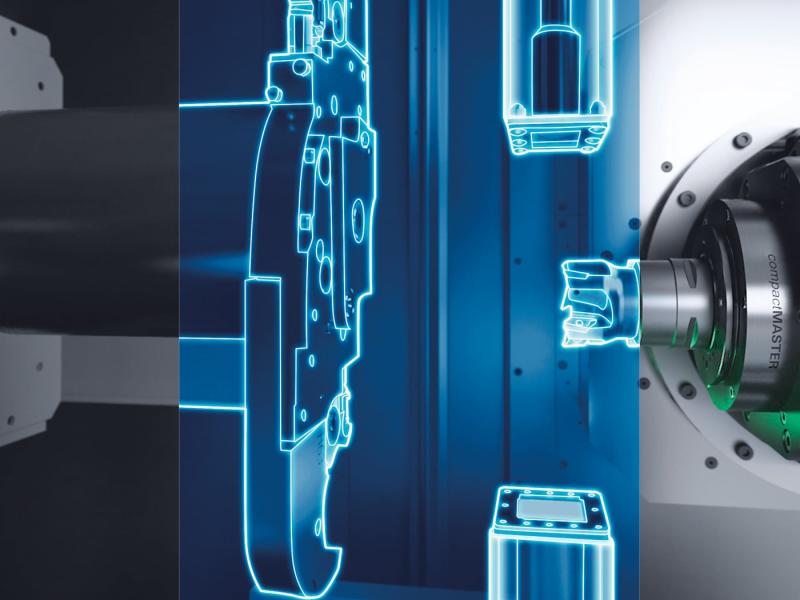
Artificial intelligence is evolving from a topic of the future to a practical tool for industrial manufacturing. In line with this, DMG MORI will be presenting a turn-mill showcase at Hannover Messe 2026 to demonstrate how AI can deliver substantial added value along the CNC process chain, from work preparation and machining to the analysis of energy and status data.
High-performance titanium components
When the IMOCA ocean-going yacht "DMG MORI Global One" cuts through waves and gusts on the ocean at high speed, reliability is not optional but a prerequisite for success. There are no second chances when it comes to materials, components, and manufacturing. This is especially true for the highly stressed bearings of the swiveling keel. The showcase therefore focuses on a rear keel bearing made of titanium—a practical example of complex structural components, such as those required in aerospace, medical technology, and energy plant construction.
Precision and complex geometries
Titanium is considered a challenging material due to its strength, toughness, and high heat generation during machining. The component itself also requires maximum precision. At the same time, the geometry of the bearing plate of the "keel bearing" requires numerous machining steps. In a single clamping: Turning, drilling, and simultaneous 5-axis milling—supplemented by in-process measurement technology. Complete turn-mill machining operations of this kind are examples of increasing complexity and the necessary perspective on a consistent process chain.
Digital work preparation
Accordingly, optimization begins here in the work preparation stage: AI-based CAM systems support the analysis of geometry and the creation of machining strategies, while 3D simulations ensure collision-free tool paths, taking machine models into account. This reduces iteration loops between CAM, simulation, and machine, and allows robust machining processes to be achieved more quickly.
Tool management in perfection
A stable turn-mill process also begins with tool management. An AI-supported tool search in the CAM system helps users quickly identify suitable tools and complete holders. Directly on the machine, the Tool Visualizer then creates additional transparency about the tool status: Contactless tool measurement in the work area, automatic offset creation, and wear and
damage detection, including 3D model generation, help to reduce setup costs and increase process reliability. In addition, the CELOS X Widget Easy Tool Monitor 2.0 helps to keep track of tool monitoring data.
AI assistance in processing and quality in the process
During machining, machine and process signals such as spindle load, vibrations, or feed behavior are continuously recorded and evaluated. The CELOS X Widget MPC (Machine Protection Control) monitors the process and detects unusual process conditions at an early stage in order to identify critical situations in good time and protect machines and tools.
In addition, the AI Chip Removal demonstrates the automatic detection and removal of critical chip accumulations through defined cleaning movements – to reduce interruptions and stabilize machining.
In-process measurement technology is a key component of quality assurance: measurement cycles directly in the machine check geometries and functional surfaces during machining. Thermal effects or changes in workpiece tension can cause dimensional deviations, especially with titanium. Measurements during the process enable early corrections and integrate quality directly into the workflow.
Energy and status data
In addition to productivity and quality, resource consumption is also becoming increasingly important. Three CELOS X apps monitor and reduce energy consumption, track energy costs and CO₂ emissions in real time, save energy through automatic wake-up and warm-up functions, and detect air leaks at an early stage.
From virtual representation to mastery of manufacturing complexity in the process
The Turn-Mill Showcase at Hannover Messe is impressive proof of the status quo of AI use in CNC manufacturing. The example also underscores the forward-looking aspirations of the Machining Transformation (MX) strategy – from work preparation, process integration, and automation to Green Transformation (GX). With the consistent collection of planning, process, quality, and energy data, an increasingly detailed digital image of real manufacturing is gradually developing.
Highlights
- AI along the CNC process chain: Turn-Mill Showcase demonstrates digital process integration from digital work preparation to energy analysis
- Complete machining of a titanium keel bearing: Practical example of sophisticated structural components from aerospace, medical technology, and Energy plant construction
- AI assistance in processing: Technology cycles such as MPC and AI Chip Removal support stable and robust machining processes
- Integrated quality assurance: In-process measurement technology and Tool Visualizer increase transparency and process reliability
- Machining Transformation (MX): Consistent data usage as the basis for digital process chains
AI in the process
- Digital work preparation
AI-based workflows support analysis and implementation: Programmers are supported with specific suggestions, and tool paths are virtually checked taking into account the machine model. - Tool-Management:
AI-supported tool search in the CAM system speeds up the selection of suitable tools and complete tool sets. In the process itself, the Tool Visualizer creates transparency about the tool condition through contactless measurement in the working space, including offset creation, wear/damage detection, and 3D model generation; the CELOS X widget "Easy Tool Monitoring" supports an overview of tool status and service life. - Machining (AI assistance):
Process signals such as spindle load, vibrations, and feed behavior are recorded and evaluated. MPC (Machine Protection Control) detects unusual process conditions at an early stage and protects the machine and tool; AI Chip Removal detects critical chip accumulations and automatically removes them using defined cleaning movements. - Quality in the process:
In-process measurement technology checks geometries and functional surfaces during machining. This allows influences such as thermal effects, tool drift, or stress changes to be detected early on and compensated for by making corrections to the machining process—quality is integrated directly into the process. - Energy and status data:
Continuous data collection shows energy requirements for each machining step and highlights non-productive times as resource drivers. Three CELOS X apps monitor and reduce energy consumption, track energy costs and CO₂ emissions in real time, save energy through automatic shutdowns, and detect air leaks at an early stage. - Availability:
Preventive maintenance uses condition data to identify maintenance requirements at an early stage and make maintenance plannable—with a focus on axes and spindles to increase plant availability and reduce unplanned downtime.
Artificial intelligence is evolving from a topic of the future to a practical tool for industrial manufacturing. In line with this, DMG MORI will be presenting a turn-mill showcase at Hannover Messe 2026 to demonstrate how AI can deliver substantial added value along the CNC process chain, from work preparation and machining to the analysis of energy and status data.
High-performance titanium components
When the IMOCA ocean-going yacht "DMG MORI Global One" cuts through waves and gusts on the ocean at high speed, reliability is not optional but a prerequisite for success. There are no second chances when it comes to materials, components, and manufacturing. This is especially true for the highly stressed bearings of the swiveling keel. The showcase therefore focuses on a rear keel bearing made of titanium—a practical example of complex structural components, such as those required in aerospace, medical technology, and energy plant construction.
Precision and complex geometries
Titanium is considered a challenging material due to its strength, toughness, and high heat generation during machining. The component itself also requires maximum precision. At the same time, the geometry of the bearing plate of the "keel bearing" requires numerous machining steps. In a single clamping: Turning, drilling, and simultaneous 5-axis milling—supplemented by in-process measurement technology. Complete turn-mill machining operations of this kind are examples of increasing complexity and the necessary perspective on a consistent process chain.
Digital work preparation
Accordingly, optimization begins here in the work preparation stage: AI-based CAM systems support the analysis of geometry and the creation of machining strategies, while 3D simulations ensure collision-free tool paths, taking machine models into account. This reduces iteration loops between CAM, simulation, and machine, and allows robust machining processes to be achieved more quickly.
Tool management in perfection
A stable turn-mill process also begins with tool management. An AI-supported tool search in the CAM system helps users quickly identify suitable tools and complete holders. Directly on the machine, the Tool Visualizer then creates additional transparency about the tool status: Contactless tool measurement in the work area, automatic offset creation, and wear and
damage detection, including 3D model generation, help to reduce setup costs and increase process reliability. In addition, the CELOS X Widget Easy Tool Monitor 2.0 helps to keep track of tool monitoring data.
AI assistance in processing and quality in the process
During machining, machine and process signals such as spindle load, vibrations, or feed behavior are continuously recorded and evaluated. The CELOS X Widget MPC (Machine Protection Control) monitors the process and detects unusual process conditions at an early stage in order to identify critical situations in good time and protect machines and tools.
In addition, the AI Chip Removal demonstrates the automatic detection and removal of critical chip accumulations through defined cleaning movements – to reduce interruptions and stabilize machining.
In-process measurement technology is a key component of quality assurance: measurement cycles directly in the machine check geometries and functional surfaces during machining. Thermal effects or changes in workpiece tension can cause dimensional deviations, especially with titanium. Measurements during the process enable early corrections and integrate quality directly into the workflow.
Energy and status data
In addition to productivity and quality, resource consumption is also becoming increasingly important. Three CELOS X apps monitor and reduce energy consumption, track energy costs and CO₂ emissions in real time, save energy through automatic wake-up and warm-up functions, and detect air leaks at an early stage.
From virtual representation to mastery of manufacturing complexity in the process
The Turn-Mill Showcase at Hannover Messe is impressive proof of the status quo of AI use in CNC manufacturing. The example also underscores the forward-looking aspirations of the Machining Transformation (MX) strategy – from work preparation, process integration, and automation to Green Transformation (GX). With the consistent collection of planning, process, quality, and energy data, an increasingly detailed digital image of real manufacturing is gradually developing.
Highlights
- AI along the CNC process chain: Turn-Mill Showcase demonstrates digital process integration from digital work preparation to energy analysis
- Complete machining of a titanium keel bearing: Practical example of sophisticated structural components from aerospace, medical technology, and Energy plant construction
- AI assistance in processing: Technology cycles such as MPC and AI Chip Removal support stable and robust machining processes
- Integrated quality assurance: In-process measurement technology and Tool Visualizer increase transparency and process reliability
- Machining Transformation (MX): Consistent data usage as the basis for digital process chains
AI in the process
- Digital work preparation
AI-based workflows support analysis and implementation: Programmers are supported with specific suggestions, and tool paths are virtually checked taking into account the machine model. - Tool-Management:
AI-supported tool search in the CAM system speeds up the selection of suitable tools and complete tool sets. In the process itself, the Tool Visualizer creates transparency about the tool condition through contactless measurement in the working space, including offset creation, wear/damage detection, and 3D model generation; the CELOS X widget "Easy Tool Monitoring" supports an overview of tool status and service life. - Machining (AI assistance):
Process signals such as spindle load, vibrations, and feed behavior are recorded and evaluated. MPC (Machine Protection Control) detects unusual process conditions at an early stage and protects the machine and tool; AI Chip Removal detects critical chip accumulations and automatically removes them using defined cleaning movements. - Quality in the process:
In-process measurement technology checks geometries and functional surfaces during machining. This allows influences such as thermal effects, tool drift, or stress changes to be detected early on and compensated for by making corrections to the machining process—quality is integrated directly into the process. - Energy and status data:
Continuous data collection shows energy requirements for each machining step and highlights non-productive times as resource drivers. Three CELOS X apps monitor and reduce energy consumption, track energy costs and CO₂ emissions in real time, save energy through automatic shutdowns, and detect air leaks at an early stage. - Availability:
Preventive maintenance uses condition data to identify maintenance requirements at an early stage and make maintenance plannable—with a focus on axes and spindles to increase plant availability and reduce unplanned downtime.