
Short interview with Peter Mösle
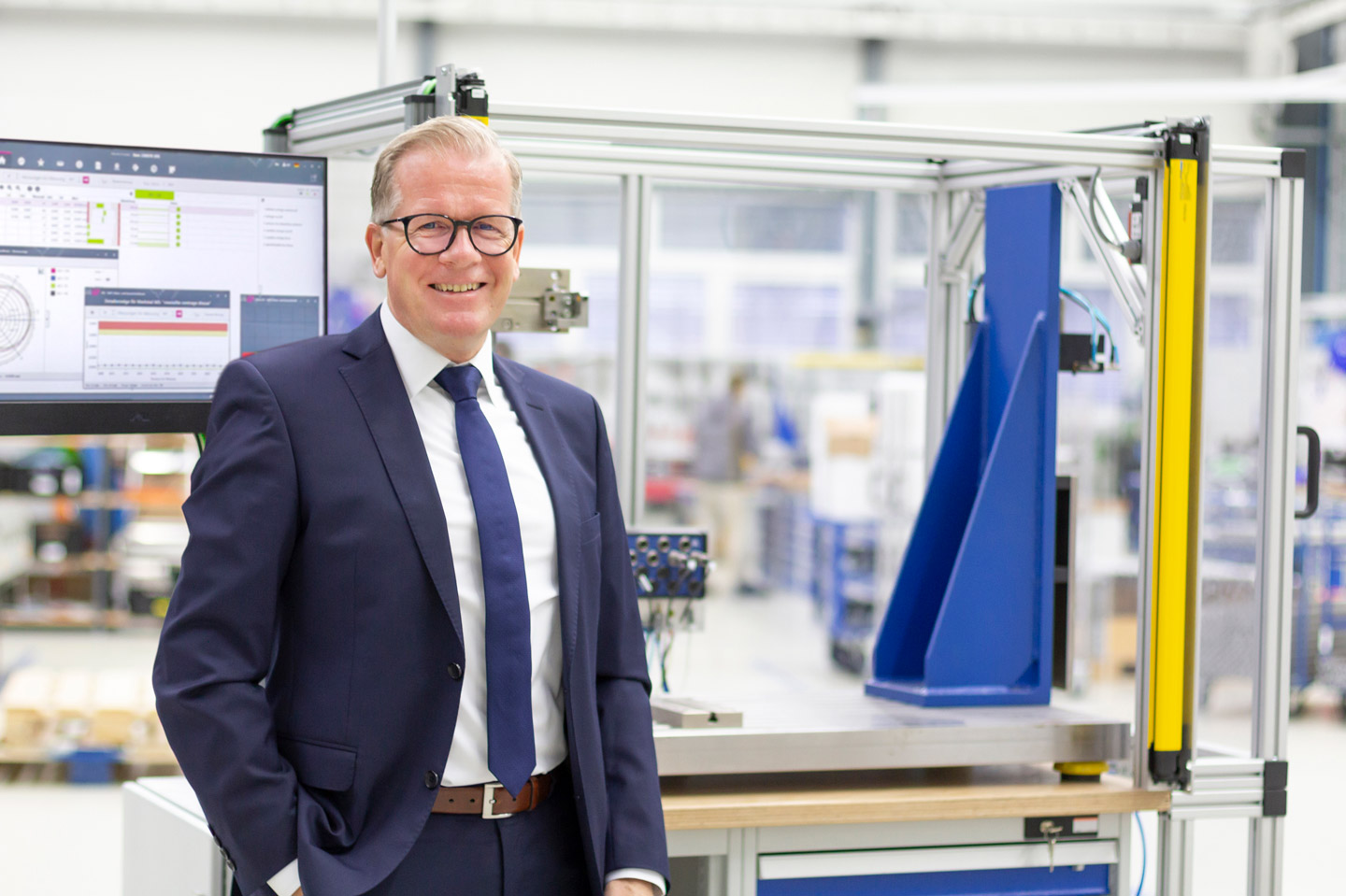
During the run-up to the Control 2020 trade fair, Peter Mösle, Head of Sales of the Measuring Machines business division at Blum-Novotest, spoke about current challenges around post-process measuring technology and the structural change in the automotive and supplier industry.
Mr Mösle, Blum-Novotest has manufactured post-process measuring machines for the automotive industry since 1983. How have the market requirements changed since then?
Our measuring machines are part of the production lines, so changes in the machining centres often impact our area of responsibility directly. In particular, the continuous reduction in cycle times, but also the ever-decreasing tolerances are challenges that we must solve. Where workshop drawings previously specified tenths or at most a few hundredths of a millimetre, today’s requirements are in the single-digit micron range. Another key aspect is repeatability, which means the ability to investigate the 5th or 5000th workpiece in a reproducible manner. Ultimately, all these measured results must also be documented with a link to the workpiece. Alongside these technical requirements, there is the need for high flexibility in terms of type diversity as well as a long and functionally reliable service life – all at the lowest possible purchase price. The advent of electric mobility means that the deck is being reshuffled...
During the run-up to the Control 2020 trade fair, Peter Mösle, Head of Sales of the Measuring Machines business division at Blum-Novotest, spoke about current challenges around post-process measuring technology and the structural change in the automotive and supplier industry.
Mr Mösle, Blum-Novotest has manufactured post-process measuring machines for the automotive industry since 1983. How have the market requirements changed since then?
Our measuring machines are part of the production lines, so changes in the machining centres often impact our area of responsibility directly. In particular, the continuous reduction in cycle times, but also the ever-decreasing tolerances are challenges that we must solve. Where workshop drawings previously specified tenths or at most a few hundredths of a millimetre, today’s requirements are in the single-digit micron range. Another key aspect is repeatability, which means the ability to investigate the 5th or 5000th workpiece in a reproducible manner. Ultimately, all these measured results must also be documented with a link to the workpiece. Alongside these technical requirements, there is the need for high flexibility in terms of type diversity as well as a long and functionally reliable service life – all at the lowest possible purchase price. The advent of electric mobility means that the deck is being reshuffled...