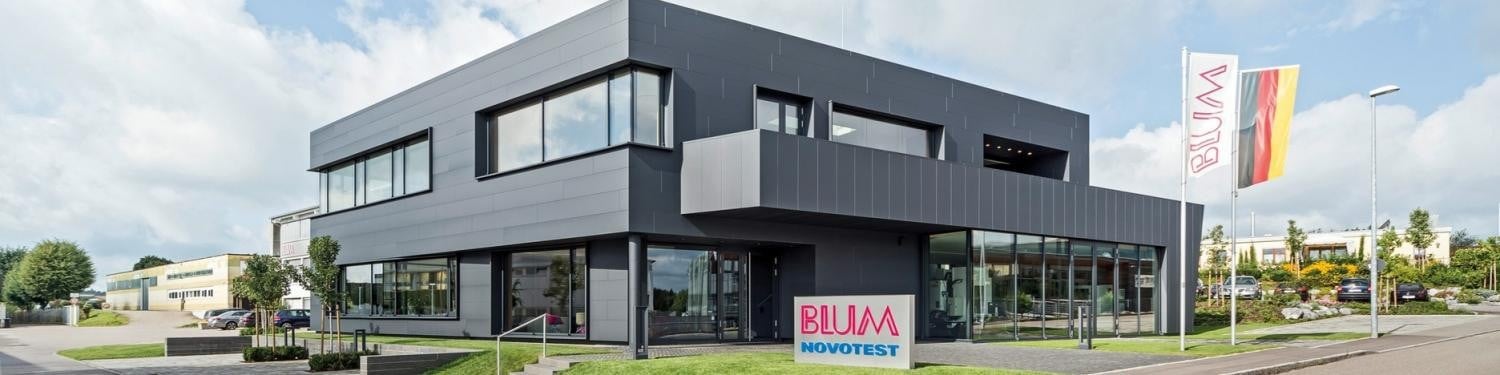

“Today, we are both a software and a hardware company”
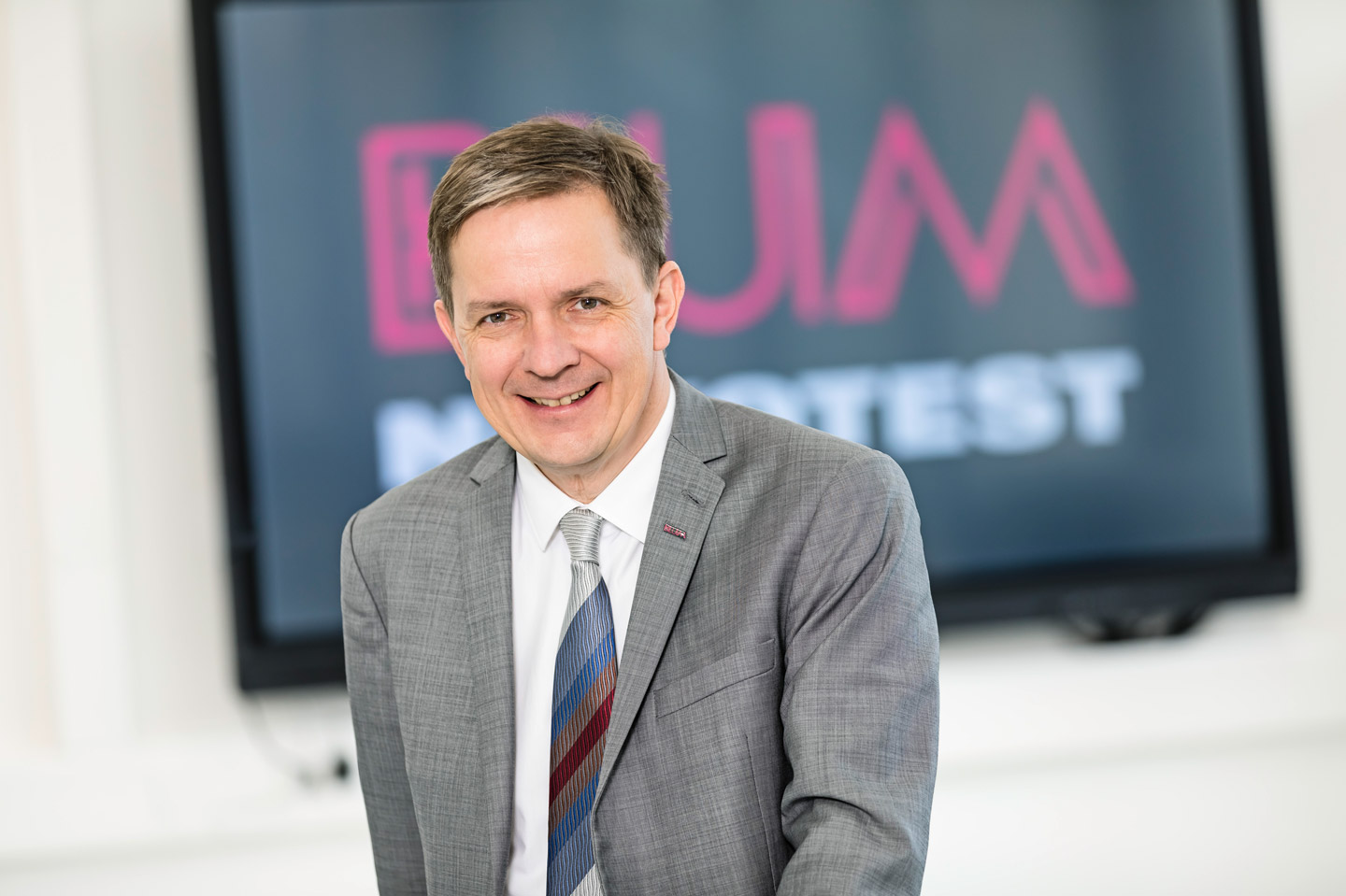
Whilst the Corona pandemic continues to occupy the world in varying degrees, the increasing number of vaccinations offers a ray of hope on the horizon. The current crisis also poses a challenge for a measuring and testing technology company such as Blum-Novotest, based in Ravensburg, Germany. In this interview, President Alexander Blum shares his experiences and his view for the future. He is convinced: Family-run businesses are more circumspect and act better in times of crisis than other companies.
Mr Blum, what is your view, as an entrepreneur, on the Corona pandemic?
Corona confronted us with a somewhat unusual economic crisis. Moreover, for the machine tool industry - like the 2008/2009 financial crisis - it coincided with the early phase of a structural crisis. The additional pressure has intensified, but also accelerated the structural crisis. In this respect, there is a positive aspect to such crises, because they accelerate the necessary process of change and lead to a quicker recovery after the crisis.
You could say that the financial crisis was a training camp for the current situation. We introduced measures such as short-time work during the financial crisis, and we are also familiar with the relevant financial figures. The difference is what I would like to call an “externally-driven reduction of costs”. In addition to the fact that we drew up our own cost-cutting programmes, as we did in 2008/09, this time, the crisis itself brought savings - trade fairs were cancelled, business travel was not possible.
Unlike in 2009, we had put some of our sales staff on short-time work – which at first sight is counterproductive, because in times of crisis, you should really be trying to sell as much as you can. But when your sales staff can’t travel to visit customers, that’s simply not possible.
However, what this crisis did was provide the opportunity to invest the additional money and hours we saved more heavily in future topics. We restructured our research division and the administration. In both areas, we merged various groups, which we are confident will optimise our communication and allow us to exploit various synergies. Furthermore, even in the midst of this crisis, – and as part of our responsibility for the future – we installed a 208 kWp photovoltaic system with the capacity to supply over 100 households.
Whilst the Corona pandemic continues to occupy the world in varying degrees, the increasing number of vaccinations offers a ray of hope on the horizon. The current crisis also poses a challenge for a measuring and testing technology company such as Blum-Novotest, based in Ravensburg, Germany. In this interview, President Alexander Blum shares his experiences and his view for the future. He is convinced: Family-run businesses are more circumspect and act better in times of crisis than other companies.
Mr Blum, what is your view, as an entrepreneur, on the Corona pandemic?
Corona confronted us with a somewhat unusual economic crisis. Moreover, for the machine tool industry - like the 2008/2009 financial crisis - it coincided with the early phase of a structural crisis. The additional pressure has intensified, but also accelerated the structural crisis. In this respect, there is a positive aspect to such crises, because they accelerate the necessary process of change and lead to a quicker recovery after the crisis.
You could say that the financial crisis was a training camp for the current situation. We introduced measures such as short-time work during the financial crisis, and we are also familiar with the relevant financial figures. The difference is what I would like to call an “externally-driven reduction of costs”. In addition to the fact that we drew up our own cost-cutting programmes, as we did in 2008/09, this time, the crisis itself brought savings - trade fairs were cancelled, business travel was not possible.
Unlike in 2009, we had put some of our sales staff on short-time work – which at first sight is counterproductive, because in times of crisis, you should really be trying to sell as much as you can. But when your sales staff can’t travel to visit customers, that’s simply not possible.
However, what this crisis did was provide the opportunity to invest the additional money and hours we saved more heavily in future topics. We restructured our research division and the administration. In both areas, we merged various groups, which we are confident will optimise our communication and allow us to exploit various synergies. Furthermore, even in the midst of this crisis, – and as part of our responsibility for the future – we installed a 208 kWp photovoltaic system with the capacity to supply over 100 households.