

DMG MORI at Hannover Messe 2026: Machining Transformation: The Key to the Future of Manufacturing
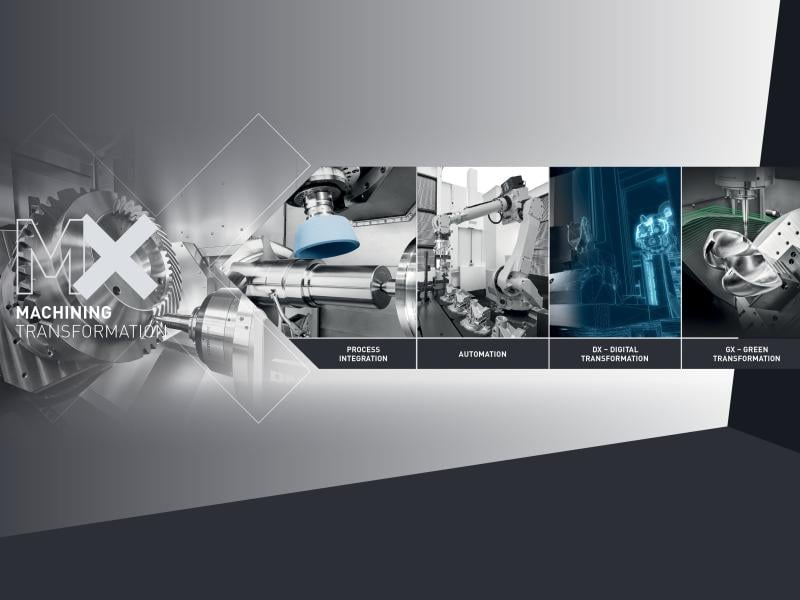
From April 20 to 24, 2026, DMG MORI will present its comprehensive Machining Transformation (MX) strategy at the Hannover Messe. At the exhibition booth (Hall 27, Booth A36), the company will demonstrate how manufacturing companies can meet the growing demands for efficiency, precision, and sustainability. Using a walk-in demonstration model of the DMU 340 Gantry 5-axis milling machine and a turn-mill showcase for the AI-supported manufacturing of an ocean-going racing yacht component, the booth will highlight the four pillars of modern production: process integration, automation, Digital Transformation (DX), and Green Transformation (GX). DMG MORI combines these elements as part of its MX strategy into an integrated portfolio for future-proof and competitive manufacturing.
Machining Transformation (MX): The Four Pillars of Modern Manufacturing
With its Machining Transformation (MX) concept, DMG MORI aims to view manufacturing processes not as isolated steps, but as a seamless, optimized end-to-end process. The following pillars form the foundation of this approach:
Process integration: Combining multiple machining operations—such as turning, milling, grinding, and measuring—into a single machine reduces cycle times, minimizes the footprint, and improves part accuracy.
Automation: Integrated and end-to-end automation solutions, ranging from pallet handling to turnkey production cells, ensure maximum machine utilization and autonomous production.
Digital Transformation (DX): The intelligent use of data, software, and AI across the entire process chain ensures maximum transparency and efficiency, from engineering through to service.
Green Transformation (GX): Innovative technologies and energy-efficient machine designs enable resource-efficient production and help customers achieve their sustainability goals.
MX in practice: AI-assisted manufacturing of a high-tech sail component
At the trade show, DMG MORI demonstrates how these four pillars interact in practice using the example of a highly complex component from the world of competitive sailing—the rear keel bearing of the IMOCA ocean-going yacht “DMG MORI Global One”: Made of titanium, the component is difficult to machine due to its toughness and heat generation, and combines the highest demands for precision and geometric complexity. It serves as a prime example of the sophisticated components also required in the aerospace and medical technology sectors. This showcase brings to life how a seamless CNC process chain, optimized with artificial intelligence (AI), is revolutionizing manufacturing.
The process begins with intelligent planning and simulation. CAM systems and 3D simulations generate collision-free toolpaths and develop robust machining strategies, significantly reducing the number of iteration loops. During machining, AI assistance intervenes in the process: Intelligent technology cycles such as MPC (Machine Protection Control) monitor the process in real time, thereby protecting the machine and tool from overload. At the same time, the “AI Chip Removal” software function independently detects critical chip accumulations and removes them via intelligently controlled coolant nozzles that flush the chips away precisely where they accumulate. This eliminates the need for manual intervention and significantly increases process stability. For integrated quality assurance, measuring probes inspect critical geometries directly on the machine. This enables immediate correction of deviations caused by thermal effects or tool wear. Continuous monitoring of energy and process data with CELOS X rounds out the process. It makes resource consumption visible for each machining step. This allows users to identify optimization potential and sustainably increase energy efficiency.
The synergy of these technologies makes manufacturing more reliable, precise, and resource-efficient, paving the way for fully digitized, sustainable production.
At the DMG MORI booth, visitors can see the future of manufacturing for yourself:
Hannover Messe
April 20–24, 2026
Hall 27, Booth A36
From April 20 to 24, 2026, DMG MORI will present its comprehensive Machining Transformation (MX) strategy at the Hannover Messe. At the exhibition booth (Hall 27, Booth A36), the company will demonstrate how manufacturing companies can meet the growing demands for efficiency, precision, and sustainability. Using a walk-in demonstration model of the DMU 340 Gantry 5-axis milling machine and a turn-mill showcase for the AI-supported manufacturing of an ocean-going racing yacht component, the booth will highlight the four pillars of modern production: process integration, automation, Digital Transformation (DX), and Green Transformation (GX). DMG MORI combines these elements as part of its MX strategy into an integrated portfolio for future-proof and competitive manufacturing.
Machining Transformation (MX): The Four Pillars of Modern Manufacturing
With its Machining Transformation (MX) concept, DMG MORI aims to view manufacturing processes not as isolated steps, but as a seamless, optimized end-to-end process. The following pillars form the foundation of this approach:
Process integration: Combining multiple machining operations—such as turning, milling, grinding, and measuring—into a single machine reduces cycle times, minimizes the footprint, and improves part accuracy.
Automation: Integrated and end-to-end automation solutions, ranging from pallet handling to turnkey production cells, ensure maximum machine utilization and autonomous production.
Digital Transformation (DX): The intelligent use of data, software, and AI across the entire process chain ensures maximum transparency and efficiency, from engineering through to service.
Green Transformation (GX): Innovative technologies and energy-efficient machine designs enable resource-efficient production and help customers achieve their sustainability goals.
MX in practice: AI-assisted manufacturing of a high-tech sail component
At the trade show, DMG MORI demonstrates how these four pillars interact in practice using the example of a highly complex component from the world of competitive sailing—the rear keel bearing of the IMOCA ocean-going yacht “DMG MORI Global One”: Made of titanium, the component is difficult to machine due to its toughness and heat generation, and combines the highest demands for precision and geometric complexity. It serves as a prime example of the sophisticated components also required in the aerospace and medical technology sectors. This showcase brings to life how a seamless CNC process chain, optimized with artificial intelligence (AI), is revolutionizing manufacturing.
The process begins with intelligent planning and simulation. CAM systems and 3D simulations generate collision-free toolpaths and develop robust machining strategies, significantly reducing the number of iteration loops. During machining, AI assistance intervenes in the process: Intelligent technology cycles such as MPC (Machine Protection Control) monitor the process in real time, thereby protecting the machine and tool from overload. At the same time, the “AI Chip Removal” software function independently detects critical chip accumulations and removes them via intelligently controlled coolant nozzles that flush the chips away precisely where they accumulate. This eliminates the need for manual intervention and significantly increases process stability. For integrated quality assurance, measuring probes inspect critical geometries directly on the machine. This enables immediate correction of deviations caused by thermal effects or tool wear. Continuous monitoring of energy and process data with CELOS X rounds out the process. It makes resource consumption visible for each machining step. This allows users to identify optimization potential and sustainably increase energy efficiency.
The synergy of these technologies makes manufacturing more reliable, precise, and resource-efficient, paving the way for fully digitized, sustainable production.
At the DMG MORI booth, visitors can see the future of manufacturing for yourself:
Hannover Messe
April 20–24, 2026
Hall 27, Booth A36