

Transforming manufacturing in aviation and space
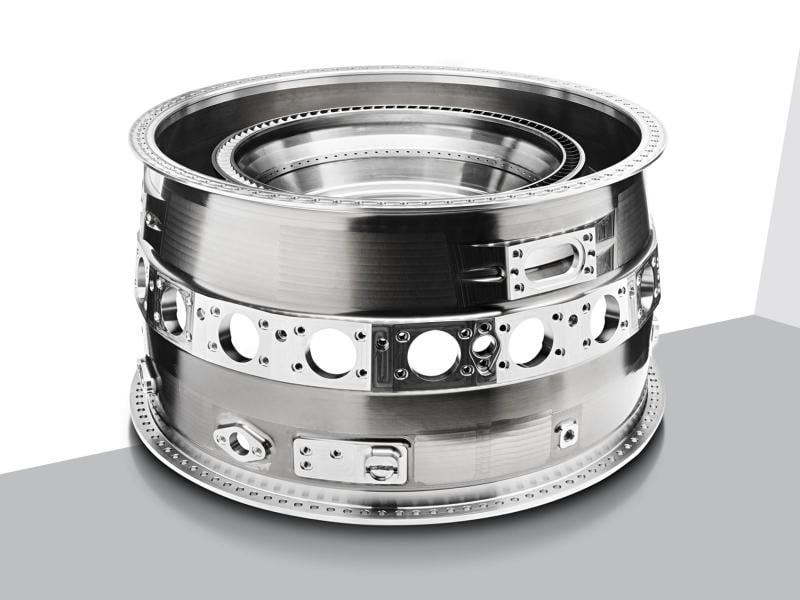
Munich. Due to their material properties and the high demands placed on quality and complexity, aerospace components are among the most challenging workpieces in machining. Manufacturers and suppliers in aviation and space operate in a globally competitive and innovative market environment with fragile supply chains and strong regulation. These conditions in particular require manufacturing processes that continuously set new standards. This is where the Aerospace Forum in Pfronten comes in: From May 19 to 20, 2026, DMG MORI, together with tool manufacturer Walter, will bring together industry experts to focus on current challenges and practical machining solutions. Michael Kirbach, Head of the Aerospace Excellence Center, summarizes what visitors can expect there: "The forum offers the aerospace community the opportunity to discuss the transformation of their industry and learn about advanced technologies."
5-axis simultaneous machining and innovative cutting technologies from Walter
5-axis simultaneous machining is an important basis for technological progress. This is where DMG MORI sets the standard in precision, technology, and application expertise. Turbine blades, structural components, and landing gear components—as different as the workpieces in aviation and space are, they all have one thing in common: their geometries are unique, and the manufacturing processes can only be standardized to a limited extent. In many cases,
5-axis milling is essential to realize these complex geometries, and it creates a basis for manufacturing such components economically in a single machining compartment. This reduces throughput times while allowing for better utilization of production capacity. Fewer re-clamping operations also lead to greater dimensional accuracy, which benefits consistent quality.
The aviation and aerospace industries use a wide variety of materials, including aluminum and composites, high-temperature-resistant nickel alloys, and lightweight, extremely strong titanium alloys. Five-axis machining allows for optimal tool positioning, ensuring consistent cutting conditions even when working with challenging materials. This results in longer tool life. With its expertise in this area of manufacturing, Walter will be providing information at the Aerospace Forum Pfronten about the latest cutting technologies and how they are proving their worth in innovative manufacturing solutions.
Holistic process integration live on the DMU 125 FDS duoBLOCK
A key feature of advanced manufacturing solutions in aviation and space is the integration of additional processes. Especially when combined with a mill-turn table, machining centers become multi-talented machines that can efficiently machine rotationally symmetrical components with complex geometries and cover additional process steps such as grinding and in-process measurement. This benefits users both in the high-precision production of a wide variety of components and in the field of MRO (maintenance, repair, overhaul). During the Aerospace Forum, DMG MORI, together with Walter and other partners, will demonstrate several solutions on different machines.
Autonomous processes across the entire shop floor
This efficient and holistic machining of aerospace components opens up a further level of productivity enhancement: flexible automation. Since aviation and space are characterized by fluctuating demand, small quantities, and changing orders, automation solutions must be individually and flexibly adaptable to a manufacturing process. Unlike in mass production, pallet and workpiece handling systems truly come into their own, especially when dealing with small to medium batch sizes. Driverless transport systems also contribute to an automated workflow by handling pallets, tools, or other materials between the machine and the warehouse—collaboratively alongside the people on the shop floor. Such automation solutions can be quickly and easily configured for the respective production environment. In many cases, a retrofit installation is also possible if users want to take a proven process to a new level of productivity.
Machining Transformation (MX): 5-axis technologies pave the way to the future of manufacturing
5-axis technology provides a stable framework for designing machining solutions in line with Machining Transformation (MX). This is because process integration and automation are, alongside Digital Transformation (DX) and Green Transformation (GX), the cornerstones of DMG MORI's manufacturing technology model. "These pillars pave the way to the future of manufacturing," says Michael Kirbach, "and with technology demonstrations, workshops, and presentations—including from industry—the Aerospace Forum Pfronten will look ahead to precisely this future."
Munich. Due to their material properties and the high demands placed on quality and complexity, aerospace components are among the most challenging workpieces in machining. Manufacturers and suppliers in aviation and space operate in a globally competitive and innovative market environment with fragile supply chains and strong regulation. These conditions in particular require manufacturing processes that continuously set new standards. This is where the Aerospace Forum in Pfronten comes in: From May 19 to 20, 2026, DMG MORI, together with tool manufacturer Walter, will bring together industry experts to focus on current challenges and practical machining solutions. Michael Kirbach, Head of the Aerospace Excellence Center, summarizes what visitors can expect there: "The forum offers the aerospace community the opportunity to discuss the transformation of their industry and learn about advanced technologies."
5-axis simultaneous machining and innovative cutting technologies from Walter
5-axis simultaneous machining is an important basis for technological progress. This is where DMG MORI sets the standard in precision, technology, and application expertise. Turbine blades, structural components, and landing gear components—as different as the workpieces in aviation and space are, they all have one thing in common: their geometries are unique, and the manufacturing processes can only be standardized to a limited extent. In many cases,
5-axis milling is essential to realize these complex geometries, and it creates a basis for manufacturing such components economically in a single machining compartment. This reduces throughput times while allowing for better utilization of production capacity. Fewer re-clamping operations also lead to greater dimensional accuracy, which benefits consistent quality.
The aviation and aerospace industries use a wide variety of materials, including aluminum and composites, high-temperature-resistant nickel alloys, and lightweight, extremely strong titanium alloys. Five-axis machining allows for optimal tool positioning, ensuring consistent cutting conditions even when working with challenging materials. This results in longer tool life. With its expertise in this area of manufacturing, Walter will be providing information at the Aerospace Forum Pfronten about the latest cutting technologies and how they are proving their worth in innovative manufacturing solutions.
Holistic process integration live on the DMU 125 FDS duoBLOCK
A key feature of advanced manufacturing solutions in aviation and space is the integration of additional processes. Especially when combined with a mill-turn table, machining centers become multi-talented machines that can efficiently machine rotationally symmetrical components with complex geometries and cover additional process steps such as grinding and in-process measurement. This benefits users both in the high-precision production of a wide variety of components and in the field of MRO (maintenance, repair, overhaul). During the Aerospace Forum, DMG MORI, together with Walter and other partners, will demonstrate several solutions on different machines.
Autonomous processes across the entire shop floor
This efficient and holistic machining of aerospace components opens up a further level of productivity enhancement: flexible automation. Since aviation and space are characterized by fluctuating demand, small quantities, and changing orders, automation solutions must be individually and flexibly adaptable to a manufacturing process. Unlike in mass production, pallet and workpiece handling systems truly come into their own, especially when dealing with small to medium batch sizes. Driverless transport systems also contribute to an automated workflow by handling pallets, tools, or other materials between the machine and the warehouse—collaboratively alongside the people on the shop floor. Such automation solutions can be quickly and easily configured for the respective production environment. In many cases, a retrofit installation is also possible if users want to take a proven process to a new level of productivity.
Machining Transformation (MX): 5-axis technologies pave the way to the future of manufacturing
5-axis technology provides a stable framework for designing machining solutions in line with Machining Transformation (MX). This is because process integration and automation are, alongside Digital Transformation (DX) and Green Transformation (GX), the cornerstones of DMG MORI's manufacturing technology model. "These pillars pave the way to the future of manufacturing," says Michael Kirbach, "and with technology demonstrations, workshops, and presentations—including from industry—the Aerospace Forum Pfronten will look ahead to precisely this future."