

We Drive Future Mobility
DISKUS WERKE Schleiftechnik – Diskus grinding rather than milling
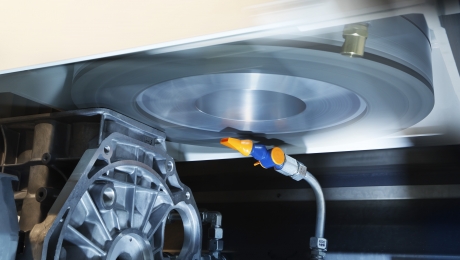
What car manufacturers call a cylinder crankcase is commonly known as the engine block. The solid component has different tasks to perform, such as supporting the dynamic parts of the crank mechanism or serving as a unit carrier for water pump or alternator. To prevent wear, the cylinder liners for the engine block are very often made of cast iron and joined with the aluminium engine block while still in the foundry. Due to the different material properties, the milling process commonly used for the upper face is demanding and expensive in terms of tooling costs. These costs have been able to be significantly reduced thanks to the face grinding technology from DISKUS WERKE Schleiftechnik GmbH, the DVS company with the most experience in the field of grinding engine components. The machining results exceeded expectations by far.
Car manufacturers used to make engine blocks completely out of grey cast iron. These days, they use die-cast aluminium in modern vehicles for weight reasons. Grey cast iron remains the material of choice for cylinder liners for many manufacturers, however, because there are very few who manage to coat the equivalent alloy version in such a way that it is wear-resistant. Pure aluminium is quite simply not suitable for the application. Cylinder liners made of GGG (nodular cast iron) are cast into the aluminium engine block in the foundry. This step illustrates the famous two sides to one coin: it is a disadvantage for the later machining of the cylinder crankcase, yet an advantage for the service life.
Two materials, two challenges
The further machining is tricky. This is because one single tool and two different materials clash during the milling process: the relatively soft aluminium die-cast casing and the relatively hard cylinder liners. The difficulty in this machining step is how to achieve the optimum wedge angle of the tools to be used and their materials. The wedge angle of different materials can differ by between 5 and 8 degrees for optimum conditions. The hardness of the cutting edge varies too. Since two different materials have to be machined at the same time during face milling of the combustion chamber sealing surface, the only solution is to achieve the best possible compromise between wedge angle and cutting platematerial. In practice, this means that the pairs of wedge angle and cutting materials selected will not deliver satisfactory results for either of the materials in the long term. Consequently, the cutting performance of the milling tool is reduced. Material is accumulated at the cutting edges, which becomes lightly rounded. This effect of steel jacket formation is familiar from incorrectly designed grinding discs. The result: the period of use of the milling tool is reduced. Depending on the cutting material, such as tungsten carbide or CBN (cubic boron nitride), between 500 and 1,200 workpieces can be machined before a twin tool has to be fitted.
Face grinding rather than milling
The grinding pioneer, DISKUS WERKE Schleiftechnik GmbH, is familiar with these problems. For more than 100 years now, the Dietzenbach-based company has been in the business of face grinding and double face grinding. In this particular case, the technology leaders were extremely inventive. They replaced milling by face grinding technology. With a correctly designed, conventional grinding disc it is now possible to machine approximately 10,000 engine blocks without intermediate dressing. A comparison of the tool costs established that at approx. 0.018 € per workpiece, the grinding tool only makes up around ten percent of the costs incurred during the milling process on account of the long service life. In addition, the workpieces are ground so precisely that their tolerances are only used to one third.
90% lower tool costs
The tolerances required for the combustion chamber sealing surface are kept small, in line with their later function in the interaction with cylinder head and gasket between the two components. The tolerances shown in the table of the gallery are to be assessed critically.
Special attention is paid to waviness and evenness, since these tolerances directly influence the service life of the cylinder head gaskets. The parallelism to the crankshaft axis or sump face guarantees problem-free camshaft drive and combustion chambers of the same size, in interaction with the cylinder head. As far as parallelism to the sump face is concerned tolerances from pre-production– the milling of the sump face – also have to be taken into consideration. These manufacturing deviations minimise the specified tolerance during milling of the combustion chamber face. The crankshaft gap can also be used as the reference plane if necessary.
Conclusion: Compared with competitive milling technology, the given manufacturing tolerances can be achieved reliably at significantly lower tool costs.
What car manufacturers call a cylinder crankcase is commonly known as the engine block. The solid component has different tasks to perform, such as supporting the dynamic parts of the crank mechanism or serving as a unit carrier for water pump or alternator. To prevent wear, the cylinder liners for the engine block are very often made of cast iron and joined with the aluminium engine block while still in the foundry. Due to the different material properties, the milling process commonly used for the upper face is demanding and expensive in terms of tooling costs. These costs have been able to be significantly reduced thanks to the face grinding technology from DISKUS WERKE Schleiftechnik GmbH, the DVS company with the most experience in the field of grinding engine components. The machining results exceeded expectations by far.
Car manufacturers used to make engine blocks completely out of grey cast iron. These days, they use die-cast aluminium in modern vehicles for weight reasons. Grey cast iron remains the material of choice for cylinder liners for many manufacturers, however, because there are very few who manage to coat the equivalent alloy version in such a way that it is wear-resistant. Pure aluminium is quite simply not suitable for the application. Cylinder liners made of GGG (nodular cast iron) are cast into the aluminium engine block in the foundry. This step illustrates the famous two sides to one coin: it is a disadvantage for the later machining of the cylinder crankcase, yet an advantage for the service life.
Two materials, two challenges
The further machining is tricky. This is because one single tool and two different materials clash during the milling process: the relatively soft aluminium die-cast casing and the relatively hard cylinder liners. The difficulty in this machining step is how to achieve the optimum wedge angle of the tools to be used and their materials. The wedge angle of different materials can differ by between 5 and 8 degrees for optimum conditions. The hardness of the cutting edge varies too. Since two different materials have to be machined at the same time during face milling of the combustion chamber sealing surface, the only solution is to achieve the best possible compromise between wedge angle and cutting platematerial. In practice, this means that the pairs of wedge angle and cutting materials selected will not deliver satisfactory results for either of the materials in the long term. Consequently, the cutting performance of the milling tool is reduced. Material is accumulated at the cutting edges, which becomes lightly rounded. This effect of steel jacket formation is familiar from incorrectly designed grinding discs. The result: the period of use of the milling tool is reduced. Depending on the cutting material, such as tungsten carbide or CBN (cubic boron nitride), between 500 and 1,200 workpieces can be machined before a twin tool has to be fitted.
Face grinding rather than milling
The grinding pioneer, DISKUS WERKE Schleiftechnik GmbH, is familiar with these problems. For more than 100 years now, the Dietzenbach-based company has been in the business of face grinding and double face grinding. In this particular case, the technology leaders were extremely inventive. They replaced milling by face grinding technology. With a correctly designed, conventional grinding disc it is now possible to machine approximately 10,000 engine blocks without intermediate dressing. A comparison of the tool costs established that at approx. 0.018 € per workpiece, the grinding tool only makes up around ten percent of the costs incurred during the milling process on account of the long service life. In addition, the workpieces are ground so precisely that their tolerances are only used to one third.
90% lower tool costs
The tolerances required for the combustion chamber sealing surface are kept small, in line with their later function in the interaction with cylinder head and gasket between the two components. The tolerances shown in the table of the gallery are to be assessed critically.
Special attention is paid to waviness and evenness, since these tolerances directly influence the service life of the cylinder head gaskets. The parallelism to the crankshaft axis or sump face guarantees problem-free camshaft drive and combustion chambers of the same size, in interaction with the cylinder head. As far as parallelism to the sump face is concerned tolerances from pre-production– the milling of the sump face – also have to be taken into consideration. These manufacturing deviations minimise the specified tolerance during milling of the combustion chamber face. The crankshaft gap can also be used as the reference plane if necessary.
Conclusion: Compared with competitive milling technology, the given manufacturing tolerances can be achieved reliably at significantly lower tool costs.