

Power-to-X for Applications - your P2X network
EU sends a signal for climate protection on the high seas
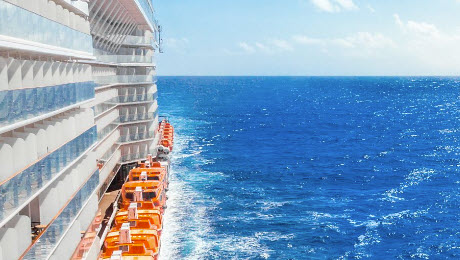
The EU is making decisive progress in climate protection on the high seas: In the trialogue negotiations on the FuelEU Maritime Regulation, the European Council, Parliament and Commission have agreed on ambitious targets that are to contribute to a rapid reduction in greenhouse gas (GHG) emissions. The EU shipping industry, as well as the manufacturers of marine engines, now have clarity on how greenhouse gas emissions are to be reduced by 2050 by means of alternative fuels.
The negotiators agreed on a more ambitious GHG reduction path than originally proposed by the EU Commission: starting in 2025 with 2 percent, shipping is to reduce its emissions by 80 percent by 2050. "The outcome of the negotiations shows that Europe accepts its role as a role model and is also willing to act accordingly. We very much support this," comments Carola Kantz, Deputy Managing Director of VDMA Power-to-X for Applications. The de facto quota now defined for renewable fuels of non-biological origin is admittedly quite low at 1 percent by 2031. "But it is a signal to the market that hydrogen and eFuels are needed quickly. That is why it is necessary to build up production capacities quickly now. Because the climate protection goals for shipping can only be achieved with alternative fuels," Kantz emphasises.
"International shipping must quickly achieve CO2 neutrality. To do this, we need the right regulatory framework, and marine technology is ready for it," explains Peter Müller-Baum, Managing Director of VDMA Engines and Systems. The VDMA has accompanied the FuelEU Maritime Regulation very closely and among other things, together with the shipbuilding association VSM, has presented the Power-to-X Roadmap for the Maritime Energy Transition, which you can download here.
Picture: Shutterstock
The EU is making decisive progress in climate protection on the high seas: In the trialogue negotiations on the FuelEU Maritime Regulation, the European Council, Parliament and Commission have agreed on ambitious targets that are to contribute to a rapid reduction in greenhouse gas (GHG) emissions. The EU shipping industry, as well as the manufacturers of marine engines, now have clarity on how greenhouse gas emissions are to be reduced by 2050 by means of alternative fuels.
The negotiators agreed on a more ambitious GHG reduction path than originally proposed by the EU Commission: starting in 2025 with 2 percent, shipping is to reduce its emissions by 80 percent by 2050. "The outcome of the negotiations shows that Europe accepts its role as a role model and is also willing to act accordingly. We very much support this," comments Carola Kantz, Deputy Managing Director of VDMA Power-to-X for Applications. The de facto quota now defined for renewable fuels of non-biological origin is admittedly quite low at 1 percent by 2031. "But it is a signal to the market that hydrogen and eFuels are needed quickly. That is why it is necessary to build up production capacities quickly now. Because the climate protection goals for shipping can only be achieved with alternative fuels," Kantz emphasises.
"International shipping must quickly achieve CO2 neutrality. To do this, we need the right regulatory framework, and marine technology is ready for it," explains Peter Müller-Baum, Managing Director of VDMA Engines and Systems. The VDMA has accompanied the FuelEU Maritime Regulation very closely and among other things, together with the shipbuilding association VSM, has presented the Power-to-X Roadmap for the Maritime Energy Transition, which you can download here.
Picture: Shutterstock