

30 years and still going strong
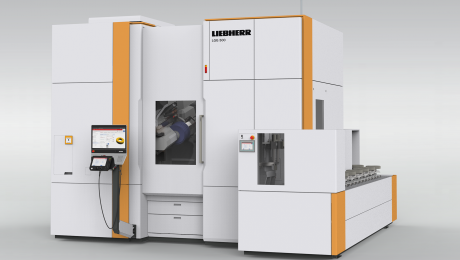
More than 30 years ago, Liebherr-Verzahntechnik GmbH introduced the LCS, an innovative gear grinding machine that was the first in the world to allow generating grinding with dressing-free CBN grinding worms. Since then, Liebherr has continued to develop this robust machine through each generation and maintained its position as an international pioneer in gear grinding. This is the story of the continuous development of an innovative product, and it’s far from over.
1st generation 1988-1998: introducing CBN generating grinding
Until the late 1980s, the market for grinding machines was dominated by two technologies: users could choose between generating grinding with dressable corundum worms and profile grinding with non dressable CBN discs. In 1988, Liebherr introduced a groundbreaking innovation: the combination of high-speed, continuous generation grinding with dressing-free CBN worms. To do this, the company had developed a metal worm base body coated with the extremely hard cutting material CBN (cubic crystalline boron nitride).
Rapid, twist-free generating grinding
The first generation of the LCS series was born. It achieved cutting speeds of 60 meters per second, which meant it could reduce hard-fine machining times by up to 70 percent. However, the high-precision tools were complex to manufacture. To be economical in use, they had to be durable enough to ensure acceptable tool cost per workpiece. This is why Liebherr still offers a reconditioning service for used tools.
Liebherr had already applied for a patent for twist-free generating grinding in 1987. This corrects twists – profile distortions caused by the process during continuous generating grinding of gears with lead modifications. Another patent was for generating grinding followed by polishing on a gear grinding machine. This idea is currently experiencing an impressive revival for low-noise, low-friction e-drive gearboxes.
2nd generation 1998-2004: directly driven machine table
At EMO 1998 in Hanover, Liebherr presented the second generation of the LCS. In addition to an optimized design, it was one of the first gear grinding machines in the world to have a direct drive for the machine table. This was a quantum leap for gear quality: the higher pitch quality of the gears made it possible to pair generated ground gears in gearboxes and thus significantly reduce noise in vehicle transmissions.
Profile grinding and CBN combination grinding
The new generation of machines was also able to perform CBN profile grinding with up to four tools on one arbor. The new technology of CBN combination grinding, which involves roughing with a worm and finishing with a disc, allowed economical and precise production of all large-module truck components on one machine. This made the LCS a worthwhile investment for many commercial vehicle manufacturers.
... read more about this story on our homepage!
More than 30 years ago, Liebherr-Verzahntechnik GmbH introduced the LCS, an innovative gear grinding machine that was the first in the world to allow generating grinding with dressing-free CBN grinding worms. Since then, Liebherr has continued to develop this robust machine through each generation and maintained its position as an international pioneer in gear grinding. This is the story of the continuous development of an innovative product, and it’s far from over.
1st generation 1988-1998: introducing CBN generating grinding
Until the late 1980s, the market for grinding machines was dominated by two technologies: users could choose between generating grinding with dressable corundum worms and profile grinding with non dressable CBN discs. In 1988, Liebherr introduced a groundbreaking innovation: the combination of high-speed, continuous generation grinding with dressing-free CBN worms. To do this, the company had developed a metal worm base body coated with the extremely hard cutting material CBN (cubic crystalline boron nitride).
Rapid, twist-free generating grinding
The first generation of the LCS series was born. It achieved cutting speeds of 60 meters per second, which meant it could reduce hard-fine machining times by up to 70 percent. However, the high-precision tools were complex to manufacture. To be economical in use, they had to be durable enough to ensure acceptable tool cost per workpiece. This is why Liebherr still offers a reconditioning service for used tools.
Liebherr had already applied for a patent for twist-free generating grinding in 1987. This corrects twists – profile distortions caused by the process during continuous generating grinding of gears with lead modifications. Another patent was for generating grinding followed by polishing on a gear grinding machine. This idea is currently experiencing an impressive revival for low-noise, low-friction e-drive gearboxes.
2nd generation 1998-2004: directly driven machine table
At EMO 1998 in Hanover, Liebherr presented the second generation of the LCS. In addition to an optimized design, it was one of the first gear grinding machines in the world to have a direct drive for the machine table. This was a quantum leap for gear quality: the higher pitch quality of the gears made it possible to pair generated ground gears in gearboxes and thus significantly reduce noise in vehicle transmissions.
Profile grinding and CBN combination grinding
The new generation of machines was also able to perform CBN profile grinding with up to four tools on one arbor. The new technology of CBN combination grinding, which involves roughing with a worm and finishing with a disc, allowed economical and precise production of all large-module truck components on one machine. This made the LCS a worthwhile investment for many commercial vehicle manufacturers.
... read more about this story on our homepage!